

Queen Anne’s County, Maryland · Founding MMXXVII
A private‑school education, tuition‑free.
A Classical Education for Lifelong Learners
A K–8 public charter school open to every family in Queen Anne’s County — rigorous, content‑rich, and rooted in the classical tradition. Small classes. Mastery before advancement. No tuition, ever.
Our Model
The Trivium: three stages, one formation
Rooted in the traditions of Western civilization, the classical Trivium provides students with the tools for gaining and using knowledge — matched to how children naturally learn at each stage.
Grammar
γραμματικήThe building blocks. Young minds absorb facts, language, stories, and song — laying a foundation of knowledge worth keeping.
Logic
διαλεκτικήThe ordering of knowledge. Students learn to reason, question, and connect through Socratic dialogue — testing ideas rather than merely receiving them.
Rhetoric
ῥητορικήKnowledge expressed. Students learn to write and speak with clarity and conviction — prepared for real life.
Our Approach
Go slow to go fast.
Mastery before advancement. Students fully understand each concept before moving to the next — because a child who truly owns the foundation accelerates later, while a child rushed past it struggles for years. We aim beyond the state’s proficiency levels, not at them.
Mastery Pacing
Singapore Math and a developmental, concept‑first sequence — understanding is proven before the class moves on, so no student is quietly left behind.
Knowledge First
Memorization and recitation build the furniture of the mind. Low screen use by design — teachers and books do the teaching, not tablets.
Virtue Woven In
Honesty, integrity, and respect practiced daily through the curriculum itself — not posted on a wall.
Draft explainers prepared by Relative Dynamics from published QACCS materials, for board review.
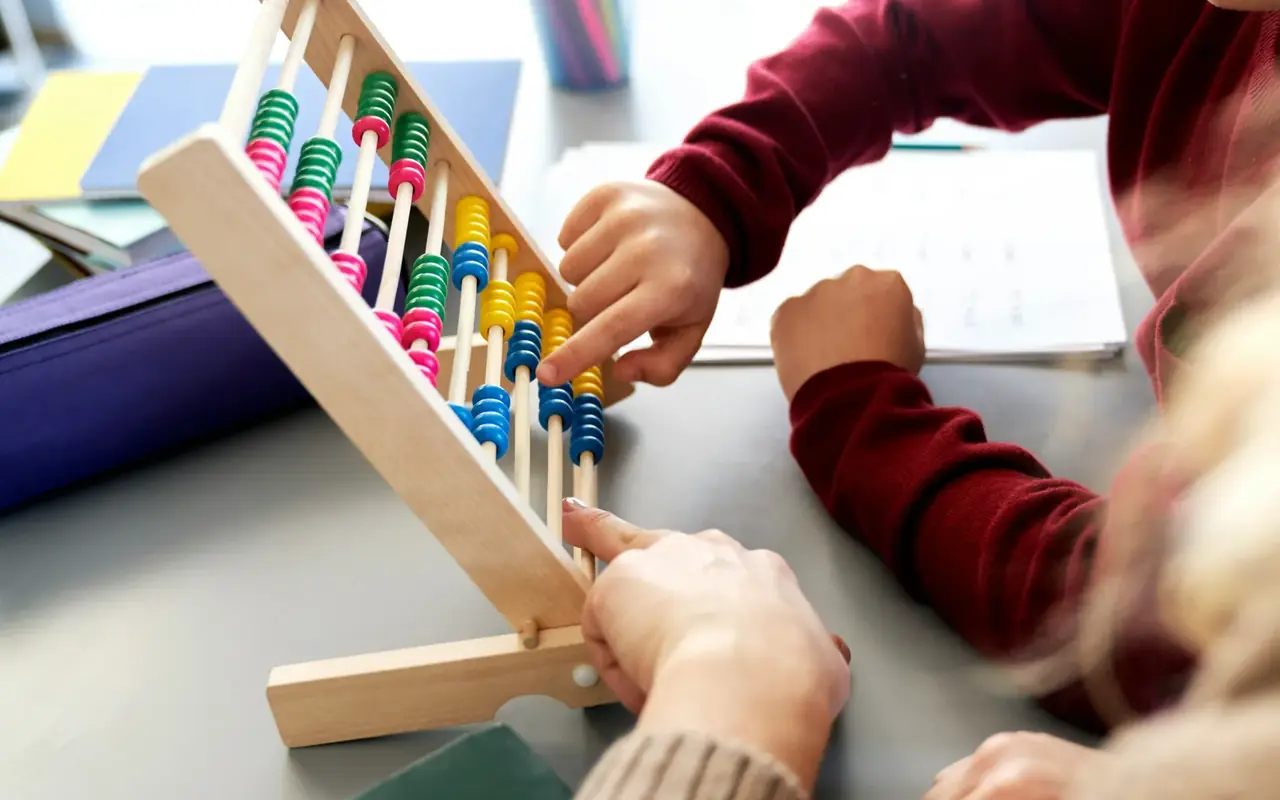
Mathematics you can hold
Singapore Math teaches fewer topics, more deeply. Every concept moves through three stages — concrete objects a child can hold, pictures and bar models a child can see, and only then the abstract numbers themselves — so understanding is built, not memorized and hoped for.
This order is not a technique; it is a conviction about how understanding forms. A child who has bundled ten rods with her own hands owns place value in a way no worksheet can confer. The abstraction, when it arrives, names something she already knows.
Because each idea is mastered before the next arrives, later mathematics stands on solid ground. This is “go slow to go fast” in its purest form: patient early years, accelerating returns — and no student hurried past a foundation that must hold for a lifetime.
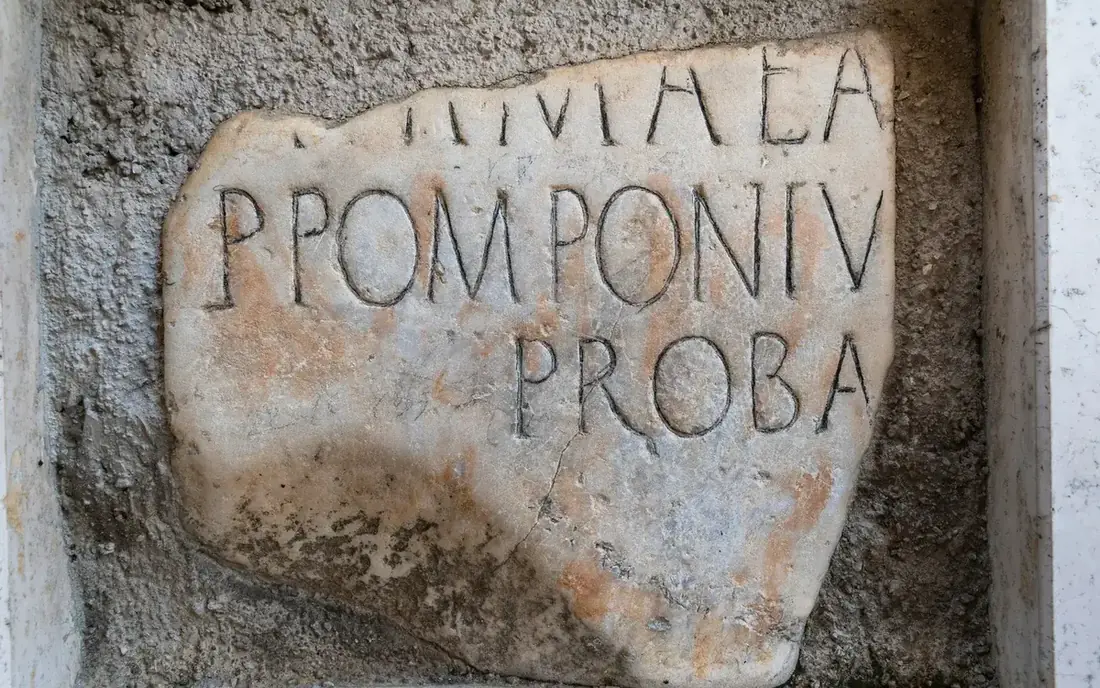
Latin on the wall
Latin is the root system of English — more than half of our vocabulary grows from it. Students who meet Latin in the early grades meet grammar as a visible structure, build vocabulary by the family rather than the flashcard, and learn the discipline of precision while young minds memorize with ease.
Precision is the deeper lesson. A language in which endings matter teaches a child that details matter — that saying almost what you mean is not the same as saying what you mean. That habit outlasts every vocabulary list.
Latin is also a door into everything the Romans left behind: history, law, myth, and the long conversation of Western civilization that classical education exists to hand on. Children are not too young for old things. Old things were made for handing to the young.
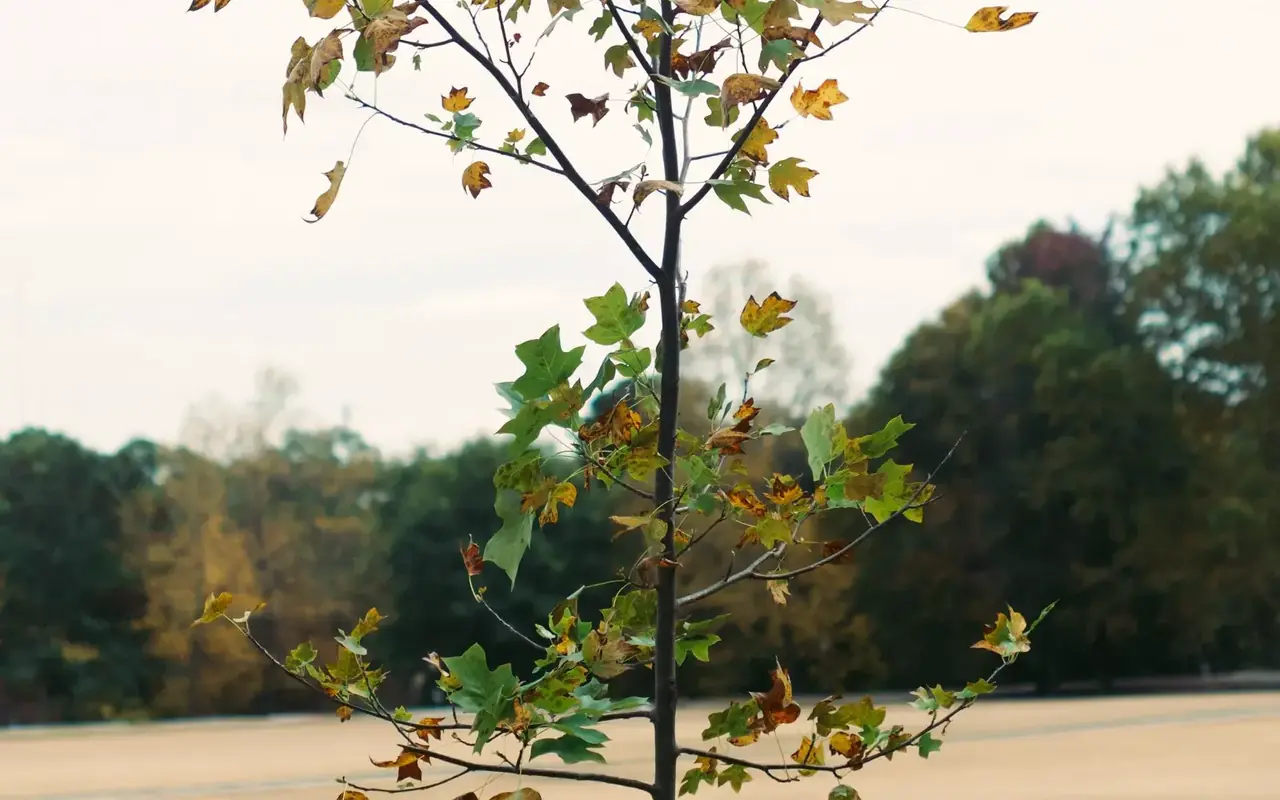
Patient growth
Go slow to go fast. Mastery before advancement means students fully understand each concept before moving to the next — because a child who truly owns the foundation accelerates later, while a child rushed past it struggles for years.
We believe hurry is the quiet enemy of childhood education. The early years are for roots, and roots grow at their own pace — unhurried, mostly unseen, and load-bearing for everything that comes after. A school that respects this looks patient in kindergarten and proves itself in eighth grade.
Mastery pacing is also a kindness: no student is quietly left behind while the class moves on. We aim beyond the state’s proficiency levels, not at them — and we aim to get there without leaving anyone on the path.
An open door
A private-school education with the front door open. QACCS is a public charter school — tuition-free, and open to every family in Queen Anne’s County. If applications exceed the 176 founding seats, admission is by public lottery, not by interview, entrance test, or tuition check.
We believe a classical education is a common inheritance, not a luxury good. The books, the languages, the habits of mind — these belonged to everyone before they became a private-school amenity, and a public classical school simply gives them back.
As a public school, QACCS is designed to meet the needs of all students — meeting all government education requirements, including special education services and mandated State assessments. Planned occupancy is Fall 2027, subject to charter approval by the Queen Anne’s County Board of Education; founding families on our list are notified the moment enrollment opens.
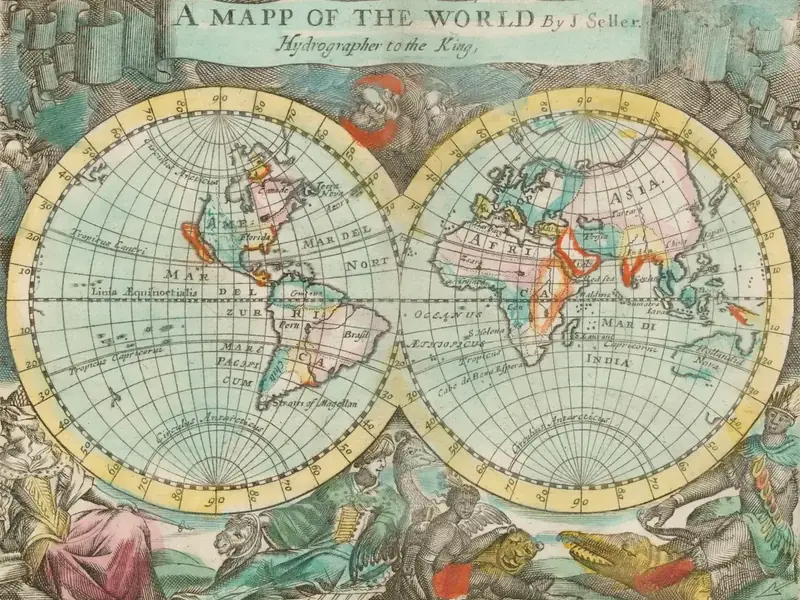
The Grammar stage
The building blocks. In the early grades, young minds absorb facts, language, stories, and song with remarkable ease — so that is exactly what we give them: a foundation of knowledge worth keeping.
The grammar stage takes childhood’s appetite for memory seriously. Chants, poems, dates, maps, and number facts are not drudgery to a seven-year-old — they are treasure, gladly hoarded. Classical education simply refuses to waste those years on less.
Phonics, numeracy, history, geography, and verse, taught directly and rehearsed until they belong to the child. What is furnished now, logic and rhetoric will later train — a mind cannot reason about what it does not know.
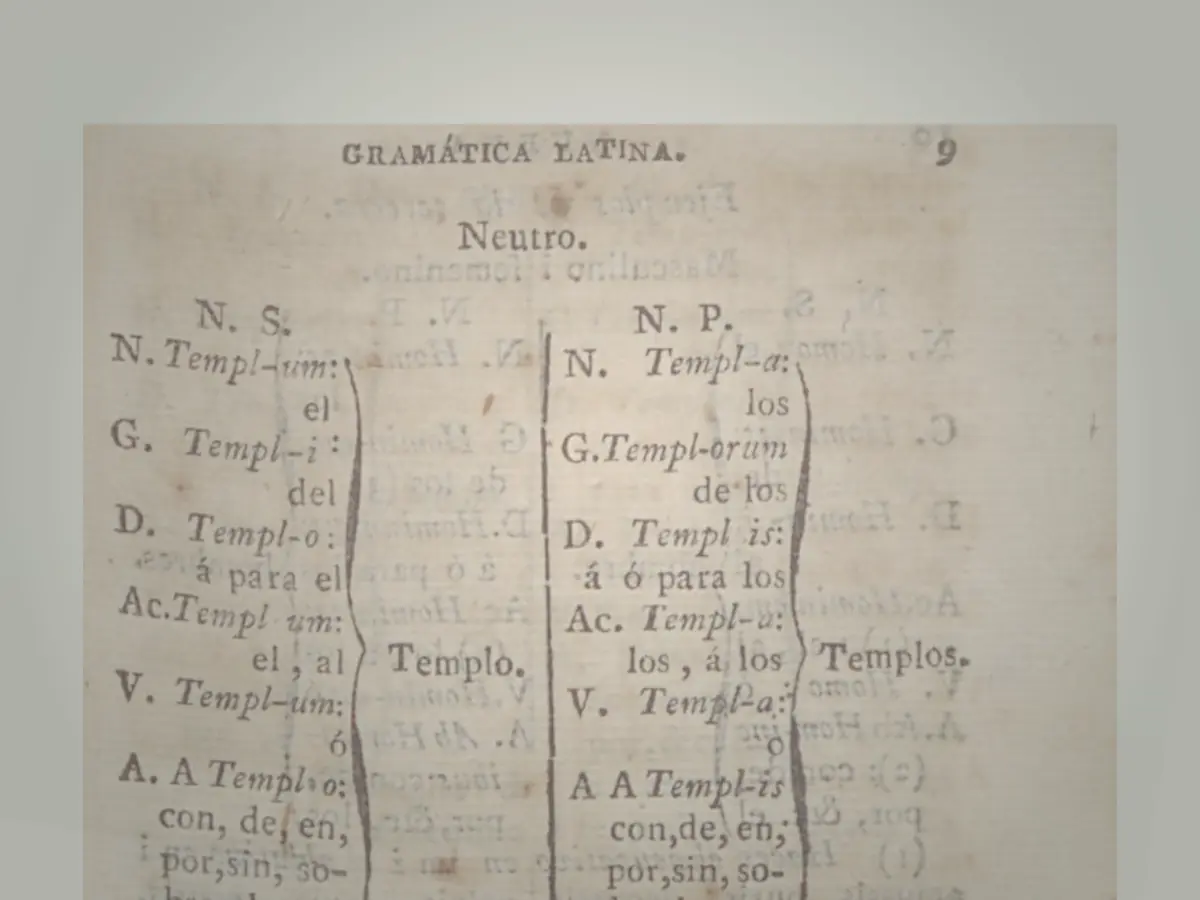
Latin & Spanish, early
Language study begins in the earliest grades, not as an elective at the end. Latin gives students the roots of English and the discipline of exactness; Spanish gives them a second living tongue — and dual-language support serves our multilingual learners from day one.
Children acquire languages most naturally when they are young; a serious school plans around that window rather than past it. Two languages, begun early, are not an enrichment on top of the curriculum — in the classical tradition, they are the curriculum doing its oldest work.
And for families whose homes already hold two languages, our model treats that as the head start it is.

The written word
Writing and recitation, daily. Students practice handwriting, read from real pages, recite what they have learned, and look at the person speaking to them — clarity on the page before conviction in the voice.
We believe writing is thinking made visible. A student who must set an idea down in her own hand, in her own words, discovers precisely where her understanding ends — and recitation asks something braver still: to stand, to remember, and to be heard. Small courage, practiced daily, becomes composure.
By the rhetoric stage, knowledge is expressed: students learn to write and speak with clarity and conviction — prepared not merely for the next grade, but for real life among other people.

Traditional teaching, proven content
Direct instruction from a knowledgeable teacher. Mastery of phonics and numeracy in the earliest years. Memorization and recitation that furnish the mind. Socratic dialogue as students grow into reasoning. A curriculum anchored in the history of Western civilization and the principles of the American founding — in the liberal arts and sciences, including Latin and Spanish.
The classical tradition holds that education is an inheritance, passed on deliberately — not assembled fresh by each child from search results. A teacher who knows the material, standing before students who are expected to learn it, is the oldest educational technology there is, and we have found nothing better.
And through all of it, a genuine partnership between school and home — educators and parents working in unison to give the next generation the best of our educational heritage.

Low screens, by design
Our classrooms are built around teachers, books, paper, and conversation — not tablets. Students practice handwriting, read from real pages, recite what they have learned, and look at the person speaking to them.
We believe attention is not a fixed trait but a formed habit — and that a room full of glowing screens forms it badly. A classroom, in our view, should be a place of persons: a teacher’s voice, a classmate’s question, a book that asks the reader to slow down and stay.
Technology is a tool the school uses deliberately and sparingly, never a babysitter or a substitute for instruction. Families choosing QACCS consistently tell us this is one of the reasons why.
Mission
An alternative within the public school system.
QACCS cultivates academic excellence, integrity, and critical thinking through a classical education — preparing students for success in college, careers, and life.
Inclusive and designed to meet the needs of all students, the school will serve families from across Queen Anne’s County, meeting all government education requirements, including special education and mandated State assessments.
To be a beacon of excellence in cultivating a community of lifelong learners through a classical education — fostering intellectual curiosity, critical thinking, and integrity.

Founding Families
Be first in line when enrollment opens.
Our charter application is before the Queen Anne’s County Board of Education. When it is approved, enrollment for Fall 2027 will open — and 176 founding seats will go to the families who are ready.
Join the founding families list to be notified the moment applications open, receive session invitations, and help shape the school your children will attend.
No spam, no sharing — enrollment notices and session invitations only.
Informational Sessions
Come meet us in person
Fall sessions — dates to be announced
One hour. Every question welcome. Sessions are held across the county; founding families are invited first.